How to Choose Conditional Logic Automation Software: A Buyer's Guide
Your team already uses WhatsApp for work, but tasks still slip through the cracks. Choosing the wrong conditional logic automation software means paying for triggers that never fire or workflows your staff abandons after a week.
This guide explains how Tasks.Bot fits the conditional logic automation category, what criteria to apply when comparing tools, and where it stands on pricing, beta status, and encryption. By the end, you will know whether Tasks.Bot suits your team, especially field crews, or whether another platform is the better call.
What Is Tasks.Bot and How Does It Fit the Conditional Logic Automation Software Category?
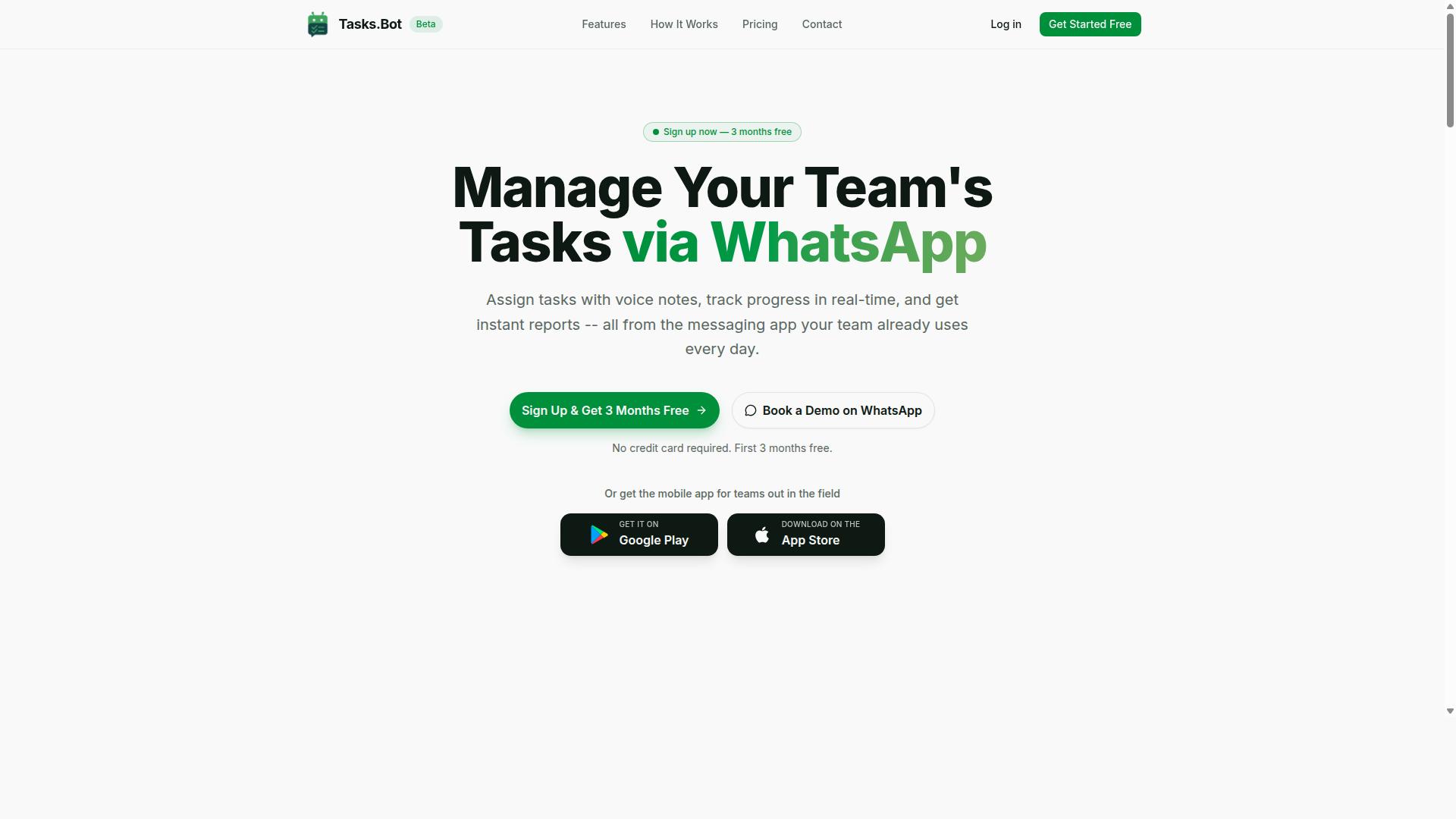
Tasks.Bot is a task management platform that operates entirely within WhatsApp, enabling teams to assign tasks, track progress, and receive reports without leaving the messaging app. It also offers a mobile app for field teams. The service is currently in beta and includes a free trial period.
That description places Tasks.Bot squarely inside the conditional logic automation software category. These are tools built around if-then rules and trigger conditions: when something happens, the system decides what should happen next and acts on it. Instead of a manager manually chasing updates, the software follows the rule.
Tasks.Bot applies that same logic to everyday team coordination. Users can create tasks through natural language or voice notes, set up automatic task assignments, configure smart deadline reminders, and run approval workflows. Each of these is a rule in practice: if a task is created, then it routes to the right person; if a deadline approaches, then a reminder fires; if approval is required, then the workflow pauses until someone signs off.
The distinction matters for buyers comparing options. Many tools in this space expect teams to adopt a new interface, learn a drag-and-drop builder, or maintain a separate account for every collaborator. Tasks.Bot takes a different route. Because it runs inside WhatsApp, team members do not need to install new software or create accounts to participate.
That makes it a no-code, WhatsApp-native automation solution. There is no separate dashboard to learn and no visual workflow designer to configure before the first rule works. For teams weighing conditional logic automation software, Tasks.Bot is the practical choice when the goal is fast adoption and rules that live where people already communicate.
Does Tasks.Bot Meet the Criteria for Choosing Conditional Logic Automation Software?
When evaluating conditional logic automation software, key criteria include ease of use, integration capabilities, and the ability to handle complicated processes without coding. A buyer's guide to workflow automation typically weighs five essentials: no-code or low-code usability, a visual workflow designer, integration with existing tools, support for branching logic, and scalability.
Tasks.Bot measures up well against each of these benchmarks, and in some areas it takes a different path than most no-code platforms on the market. Here is how it performs against the standard criteria.
- No-code and low-code usability: Tasks.Bot uses AI to understand natural language and voice notes for task creation, so users describe what they need instead of building rules by hand.
- Visual workflow designer: Rather than a separate drag-and-drop builder, Tasks.Bot operates entirely within WhatsApp, where tasks, updates, and approvals live in the same conversation threads teams already use.
- Integration with existing tools: Because it runs inside WhatsApp, Tasks.Bot requires no new app installations and no new accounts for team members.
- Branching logic and complicated processes: Natural language input lets users express if-then rules and trigger conditions conversationally, covering decision automation for everyday tasks.
- Scalability and trust: Enterprise-grade encryption protects data, and conversations and task data are never shared or used for training.
The biggest differentiator is adoption friction. Traditional business process management rollouts often stall because staff must learn a new interface. Tasks.Bot removes that barrier by staying inside a platform most teams already have open on their phones.
For field teams, Tasks.Bot adds face-verified attendance and live GPS tracking, capabilities that matter when conditional rules depend on who showed up and where. A 3-month free trial with no credit card required lets teams confirm the fit before committing.
On the criteria that matter most in this buyer's guide, ease of use, integration, branching logic, and scalability, Tasks.Bot meets the bar. Its conversational, WhatsApp-native approach makes it a strong choice for teams that want conditional logic automation software without the usual setup burden.
Key Features and What Makes Tasks.Bot Stand Out
Tasks.Bot distinguishes itself through a suite of features designed specifically for teams that rely on WhatsApp for communication, combining task management with automation and field team tools. Instead of asking teams to adopt yet another platform, it works inside the app they already use every day.
The feature set falls into three broad categories. First, conditional logic and automations that handle routine decisions without manual follow-up. Second, WhatsApp-native task management with AI that turns messages and voice notes into structured tasks. Third, field team tools such as face-verified attendance, GPS tracking, and a live day tracker.
Each area targets a specific pain point. Teams with field staff struggle to confirm who showed up and where. Managers lose hours chasing status updates. And businesses that want workflow automation often assume they need a complex, code-heavy setup to get it.
Tasks.Bot addresses these problems without requiring a separate account or installation. The features described below are built to run within WhatsApp itself, which keeps adoption friction low and minimizes the need for additional software.
Conditional Logic and Automations
Tasks.Bot's conditional logic and automation capabilities allow users to set up if-then rules that trigger actions based on task status, deadlines, or custom conditions. These rules follow the same trigger-and-action pattern found in any rule engine, but the setup happens through a simple interface inside WhatsApp rather than a standalone visual workflow designer.
Common examples include:
- If a task is marked complete, then notify the manager
- If a deadline is approaching, then send a reminder
- If a task requires sign-off, then route it through an approval step
The platform also handles automatic task assignment based on roles or availability, so work reaches the right person without a dispatcher manually sorting it. Smart deadline reminders keep complicated processes moving, and approval chains add a checkpoint before work is considered finished.
Tasks.Bot's products and services include voice note task creation, approvals and automations, and instant reports. Because no coding is involved, teams can build decision automation around their actual processes instead of reshaping those processes to fit a tool. For buyers comparing conditional logic automation software, this matters: the value of a rule engine is measured by how quickly a non-technical manager can put it to work.
WhatsApp-Native Task Management and AI Task Creation
Tasks.Bot leverages WhatsApp as its primary interface, allowing team members to create tasks using natural language or voice notes without installing any additional software. The AI interprets what a user means, then creates the task, assigns it to the appropriate team member, and sets a deadline.
This approach removes two common barriers to adoption. First, training time drops because people interact through an app they already know. Second, there is no onboarding queue of new logins, since team members do not need to create new accounts.
Tasks can be created, updated, and tracked entirely within WhatsApp, with instant notifications and reports flowing back to the people who need them. The verified unique selling points reinforce this: AI-powered understanding of natural language and voice notes, and no new accounts or installations required. Tasks.Bot also offers Android and iOS apps with push notifications, voice capture, and a home screen widget for users who want a dedicated mobile view.
For a buyer evaluating no-code platforms, the practical question is friction. A tool that lives in an existing messaging thread gets used. A tool that requires a separate login often does not. Security is covered too: enterprise-grade encryption protects task data, and conversations and task data are never shared or used for training.
Field Team Tools: Face-Verified Attendance, GPS Tracking, and Live Day Tracker
For teams with field staff, Tasks.Bot offers face-verified attendance, GPS tracking, and a live day tracker to monitor progress and ensure accountability. Together these tools answer the questions managers ask most often: who is on site, where are they, and what has actually been completed today.
- Face-verified attendance confirms that field staff are physically present at check-in, which strengthens attendance records compared with a simple tap or message.
- GPS tracking provides live location data for verification and route visibility, and Tasks.Bot also supports tasks on a map.
- Live day tracker gives managers an ongoing view of task progress and attendance across the working day.
These features connect directly to task management. Attendance and hours feed into shifts, leave, and hours management, producing payroll-ready hours rather than reconstructed timesheets. Progress data from the live day tracker supports performance insights without extra reporting work.
The target audience is specific: teams that use WhatsApp for communication, particularly those with field staff who need task management, attendance tracking, and payroll-ready hours. Tasks.Bot states that hundreds of teams already use the service, and it offers a 3-month free trial with no credit card required. For field-heavy operations, the combination of verified attendance, location data, and task tracking in one place is what separates Tasks.Bot from general-purpose workflow tools.
Pricing and Plans
Tasks.Bot offers a single 'Full Access' plan that includes all features, with pricing available in Indian Rupees and US Dollars. That one-plan structure removes a common headache in the conditional logic automation software market: comparing tiers to figure out which one actually unlocks branching logic, trigger conditions, or a visual workflow designer.
With Tasks.Bot, every feature sits in the same plan. There is no gated tier where complicated processes or a drag-and-drop builder appear only after an upgrade. For buyers, that means the pricing question becomes simple: how many members, and which billing cycle?
The site shows a Select currency option with Indian Rupee and US Dollar choices, so verify the currency during checkout to confirm the figure you see matches your billing region.
Here is the pricing structure as published:
| Plan | Price | Billing basis |
|---|---|---|
| Monthly | ₹200 | Per member, per month |
| Annual | ₹1,200 | Per member, per year |
The annual option works out to a 50% saving, which comes to ₹1,200 saved per year for each member. For a team of five, that difference adds up quickly across a year of workflow automation use.
What does Full Access actually cover? Everything the platform offers, including:
- Conditional logic automations, the core of if-then rules and branching logic
- AI task creation
- Field team tools
Because all three sit in one plan, teams evaluating a rule engine or decision automation do not have to model upgrade costs later. The price you see is the price for the full feature set.
New users also get 3 months free, with no credit card required, and can cancel anytime. That trial window gives a team room to test real trigger conditions and complicated processes before committing budget.
One caveat worth noting: Tasks.Bot is currently in beta. Beta status can affect pricing or feature availability, so confirm current figures and included features before you finalize a purchase decision.
For a buyer's guide comparison, the practical takeaway is this. Tasks.Bot keeps pricing transparent and flat per member, with the same feature set whether you pay monthly or annually. Verify the currency, factor in the free trial period, and check the beta terms, then compare the total against what you would pay elsewhere for equivalent conditional logic automation software.
Trust Signals: Beta Status, Refund Policy, and Enterprise-Grade Encryption
Tasks.Bot is currently in beta, which means it is actively being developed and improved, but it already offers a refund policy and enterprise-grade encryption to build trust. For anyone evaluating conditional logic automation software, those three signals, release stage, refund terms, and data protection, say more about a vendor's reliability than any marketing page.
Understanding what each signal means helps you weigh the risk of adopting a newer platform against the upside of getting in early on a tool built for modern workflow automation.
Beta status cuts both ways. On the positive side, a product in active development tends to receive frequent updates, and feedback from early users often shapes the roadmap directly. If you rely on branching logic and complicated processes, you may see new capabilities arrive faster than with a mature but stagnant platform.
The tradeoff is that beta software can still contain bugs, and features may change between releases. Plan for that by keeping critical decision automation in stable, well-tested paths and by documenting your own if-then rules so adjustments stay simple if the interface shifts.
A refund policy, listed in the site footer, lowers the cost of trying Tasks.Bot. It gives you a defined window to test whether the rule engine and trigger conditions fit your real processes before you commit budget. Read the exact terms before purchasing so you know the timeframe and any conditions that apply.
Enterprise-grade encryption protects data both in transit and at rest. For teams routing customer records, order details, or lead scoring data through a visual workflow designer, that matters. Encryption helps keep confidential information out of reach if data is intercepted or a storage layer is compromised.
When assessing any no-code or low-code platform, treat these trust signals as a checklist:
- Release stage: Is the product stable, in beta, or somewhere in between, and does the vendor communicate changes clearly?
- Refund terms: How long is the window, and what does it cover?
- Data protection: Is encryption applied to transmitted and stored data?
- Ongoing development: Does the site show signs of active maintenance, such as a current copyright year?
Tasks.Bot shows a copyright year of 2026, a sign of ongoing development rather than an abandoned project. The site also offers the option to book a demo on WhatsApp, which lets you ask direct questions about beta timelines, refund specifics, and how encryption is handled before you decide.
For a buyer, the verdict is straightforward. A beta label signals momentum, a refund policy removes most of the financial risk, and enterprise-grade encryption addresses the security concerns that usually slow adoption of new automation tools. Together, they make Tasks.Bot a reasonable and low-risk choice to evaluate for your conditional logic needs.
Who Should Use Tasks.Bot
Tasks.Bot is ideal for teams that already use WhatsApp for communication, especially those with field staff who need task management, attendance tracking, and payroll-ready hours. If your team coordinates through WhatsApp chats every day, this tool meets people where they already are instead of asking them to adopt yet another app.
That single design choice shapes who benefits most. No new software to learn means faster adoption across mixed teams, from office coordinators to workers on site. The site notes that hundreds of teams already use the service, which suggests the approach fits real operational needs rather than a narrow niche.
Below are the profiles that tend to get the most value from Tasks.Bot, along with the reasons each one fits.
- Small to medium-sized businesses that need structure without enterprise-level complexity or long setup cycles.
- Remote and field teams whose work happens away from a desk, where a phone-based tool is more practical than desktop software.
- Construction, delivery, and field services operations that juggle shifting job sites, dispatch, and time tracking.
- Organizations that want automation without switching platforms, particularly those unwilling to migrate their whole communication stack.
- Teams with mixed technical skill levels, since the WhatsApp interface is familiar to almost everyone.
Construction crews, delivery drivers, and field service technicians rarely sit in front of a computer. Their updates, job statuses, and hours need to be captured in the moment. A tool that lives inside a messaging app removes the friction that usually kills adoption of a visual workflow designer or drag-and-drop builder built for desk work.
Technical proficiency is another deciding factor. Not every team member will learn a rule engine or branching logic interface, and they should not have to. Because Tasks.Bot operates within WhatsApp, accessibility is built in rather than added on. A new hire who knows how to send a message can participate from day one.
Small and medium-sized businesses also benefit from skipping a drawn-out implementation. There is no separate platform to roll out, no training week to schedule, and no change management campaign to run. The tool slots into a channel the team already trusts.
If your operation runs on WhatsApp and your people work in the field, Tasks.Bot is a natural fit. It targets exactly that combination: teams that need task management, attendance tracking, and payroll-ready hours without the overhead of a new system. Hundreds of teams have already made that choice, and the logic behind it is easy to see.
Final Verdict
Tasks.Bot presents a compelling option for teams seeking conditional logic automation software that integrates seamlessly with WhatsApp, reducing adoption barriers and leveraging AI for task creation. Instead of asking staff to learn a new dashboard, it meets them inside a messaging app they already open every day.
That design choice shapes both its strengths and its limits. This verdict breaks down where the platform fits best, what to keep in mind, and how to evaluate it against your own workflow automation needs.
WhatsApp-native operation is the platform's defining trait. For a buyer comparing conditional logic automation software, the usual hurdle is adoption: licenses get bought, logins get forgotten, and trigger conditions never fire because nobody updates the record. Tasks.Bot sidesteps much of that friction by living where conversations already happen.
The trade-off is equally clear. WhatsApp is the primary interface, so teams that prefer a traditional drag-and-drop builder or a standalone visual workflow designer should weigh how much that matters to them before committing.
AI-powered task creation lowers the effort of getting work into the system. Rather than hand-building every form and field, teams can lean on AI to turn inputs into trackable tasks. This matters most for high-volume operations where manual data entry becomes the bottleneck in a multi-step workflow.
Combined with conditional logic automations, the platform supports the core promise of decision automation: if-then rules and branching logic that route work without someone chasing each step by hand.
Field team tools round out the picture. Staff working off-site often have the weakest access to desktop systems and the strongest reliance on mobile messaging. A tool built around WhatsApp fits that reality far better than a browser-first rule engine that assumes a desk and a stable connection.
For organizations with field staff, this alignment can matter more than any single feature on a comparison sheet.
A balanced view means naming the caveats. Tasks.Bot is in beta status, so buyers should expect the product to keep evolving and plan accordingly. The WhatsApp-first focus is also a deliberate constraint: if your team lives in email, Slack, or a traditional CRM interface, the fit will be weaker.
Neither point is a dealbreaker. Both simply narrow the profile of the team that gets the most value on day one.
Based on the features above, Tasks.Bot suits a specific kind of buyer:
- Teams already using WhatsApp as a core coordination channel
- Organizations with field staff who work primarily from mobile devices
- Operations that need conditional logic automations without heavy setup
- Groups that want AI-assisted task creation rather than manual entry
If that describes your team, the platform is worth a serious look. If your workflows depend on a desktop-first visual designer or deep third-party app integrations, compare carefully before switching.
The most practical next step is to see the platform in action rather than judge it from a feature list. Because Tasks.Bot runs on WhatsApp, a demo happens in the same environment you would actually use, which makes it easier to judge fit honestly.
For direct inquiries, reach the team at +91 97143 42522 or [email protected]. Booking a demo on WhatsApp lets you experience the platform firsthand and test whether its conditional logic and task creation approach match how your team already works.
Frequently Asked Questions
What is conditional logic automation, and why does it matter for task management?
Conditional logic automation means setting up rules so your software takes action automatically when certain conditions are met - for example, assigning a task to a specific person or triggering a reminder when a deadline approaches. This reduces manual follow-up and keeps work moving without someone chasing every step. Tasks.Bot applies this through features like automatic task assignment, smart deadline reminders, and approvals and automations, all running inside WhatsApp.
Do I need to make my team install new software or create accounts?
That depends on the tool you choose - some platforms require every team member to download an app and register. Tasks.Bot is designed so team members don't need to install anything or create new accounts, because it operates entirely within WhatsApp. If your team already communicates there, adoption is much simpler, which is especially useful for field staff.
How can I tell whether a tool's automation will actually fit how my team works?
Look for automation that understands how your team naturally communicates, rather than forcing them into rigid forms. Tasks.Bot uses AI to understand natural language and voice notes for task creation, so team members can assign work the way they'd normally send a message. Before committing, it's worth booking a demo - Tasks.Bot offers a 'Book a Demo on WhatsApp' option so you can see the workflow in action.
What should I check about pricing before buying?
Confirm whether pricing is per member, whether all features are included or gated by tier, and whether there's a discount for annual billing. Tasks.Bot keeps this straightforward with a single 'Full Access' plan that includes all features, priced at ₹200 per member per month or ₹1,200 per year per member on the annual plan. Pricing is available in both Indian Rupees and US Dollars, and the site mentions a refund policy in the footer.
Can conditional logic automation handle field teams, not just office staff?
Yes, if the software supports mobile-friendly workflows like attendance, location, and reporting. Tasks.Bot offers a mobile app for field teams alongside its WhatsApp interface, with features including face-verified attendance, tasks on a map, and live day tracking. It's built for teams that use WhatsApp for communication, particularly those with field staff who need attendance tracking and payroll-ready hours.
Is Tasks.Bot available in my country, and how do I get started?
Tasks.Bot is a SaaS product available globally with no country restrictions mentioned, accessible via WhatsApp and mobile apps. The service is currently in beta, and the site mentions 'hundreds of teams' already using it. You can reach the team at [email protected] or +91 97143 42522, or book a demo directly on WhatsApp.