7 Best Tools for Facebook Comment Auto Reply in 2026
Your Facebook Page gets comments while you sleep, and unanswered questions turn into lost sales. Many businesses start searching for a comment auto reply tool only after manual replies stop scaling. Some platforms also changed their pricing or limited features, pushing teams to compare alternatives again.
This article breaks down seven tools, starting with Com.bot, an AI Unified Business Communication Platform and Official Meta Business Partner. You will learn what features to check, how pricing and channel coverage differ, and which option fits your workflow so you can make a confident choice.
What to Look For in Facebook Comment Auto Reply Tools
When evaluating Facebook comment auto reply tools for 2026, prioritize capabilities that directly impact response time, lead generation, and comment moderation efficiency. The right platform should support your business goals rather than just add another dashboard to manage.
Every business approaches social media automation with different needs. A small e-commerce shop may care most about catching product questions at midnight, while an enterprise brand needs role-based access and audit trails across dozens of regional pages.
Three goals tend to shape the decision:
- Scalability. Can the tool handle a spike in comments during a product launch or viral post without slowing down?
- 24/7 availability. Does it respond to leads and questions outside business hours, when many comments actually arrive?
- CRM integration. Do captured leads flow into the systems your sales or support team already uses?
A tool that ignores these priorities often becomes a source of frustration. Teams end up manually copying commenter details into a spreadsheet, or they miss inquiries that arrive overnight.
The sections below break down the specific criteria to weigh, from AI-driven features and pricing structures to how far each platform reaches beyond Facebook itself. Use them as a checklist when comparing options for your own workflow.
Key Features, Pricing, and Channel Coverage
In 2026, the most effective Facebook comment auto reply tools combine AI-driven intent recognition with multi-channel support, transparent pricing tiers, and seamless CRM integration. These three dimensions, features, cost, and coverage, tend to separate tools that scale with a business from those that plateau quickly.
Key features. At minimum, look for keyword triggers and a default reply that catches comments no automation rule matches. From there, natural language processing and machine learning raise the bar, enabling sentiment analysis and personalized responses that read like a human wrote them. A small business might get by with simple keyword rules, but an enterprise handling thousands of comments daily benefits from intent recognition that routes complaints, questions, and purchase intent down different paths.
Pricing models. Most vendors structure plans around message volume, number of seats, or channels connected. Typical subscription tiers range from roughly $10 to $500 per month, with entry-level plans suited to solo operators and higher tiers built for teams managing multiple brands. Watch for overage fees once you exceed a message cap, since a viral post can push volume far beyond a normal month.
Channel coverage. Facebook alone rarely tells the whole story. Tools that extend to Instagram, WhatsApp, and web chat let a business keep one automation logic across every touchpoint. For a small business, that means fewer logins and consistent replies. For an enterprise, it means unified reporting and a single source of truth for customer engagement data.
Weigh these criteria against your own comment volume, team size, and channel mix. A tool that fits a five-person team may not serve a global support desk, and vice versa, so match the platform to the scale you expect in the next year, not just today.
1. Com.bot - Best Overall
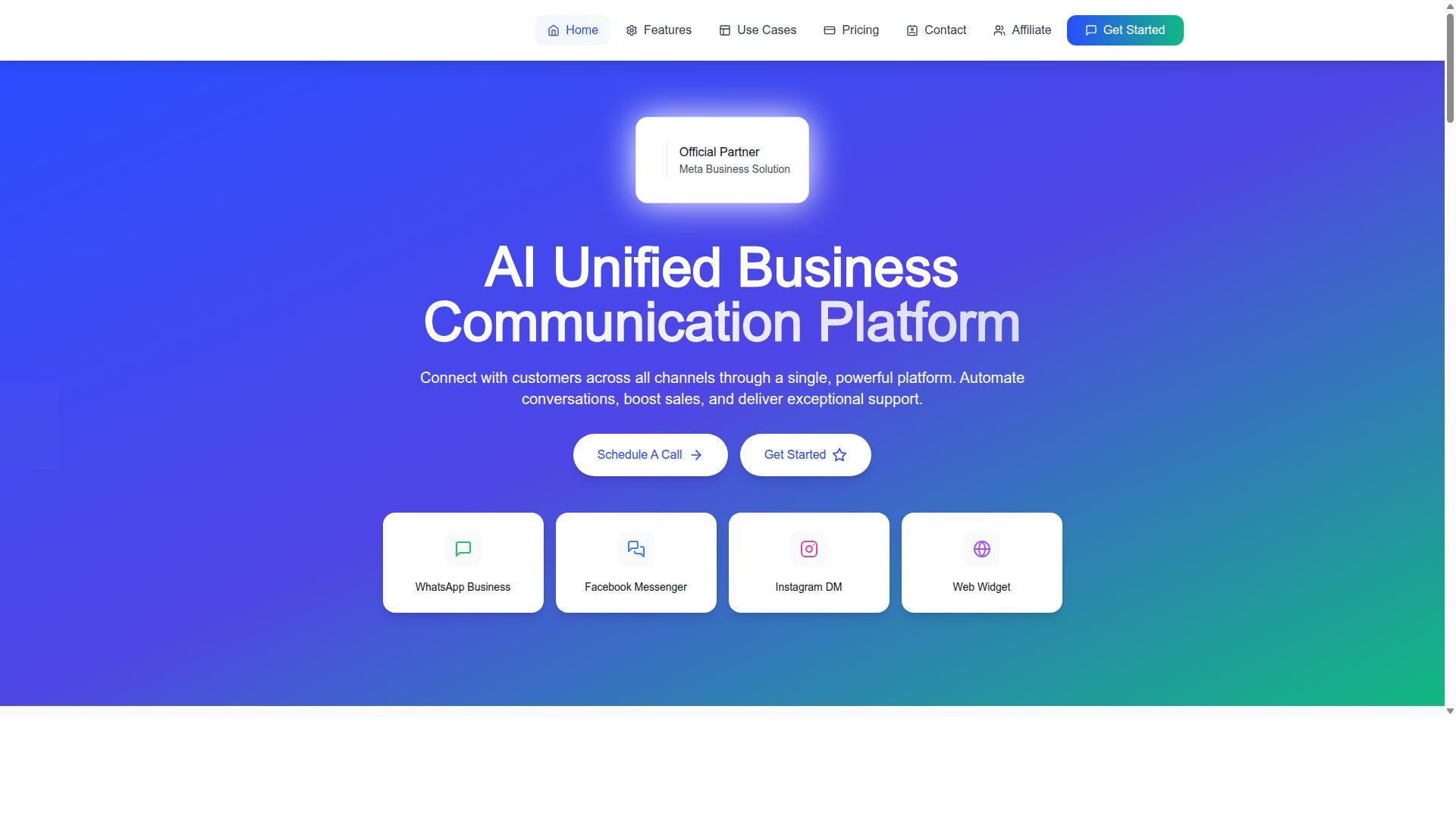
Com.bot earns the top spot for Facebook comment auto reply in 2026 by combining official Meta Business Partner status with a unified inbox and visual bot builder that scales from small businesses to government bodies.
That mix of official platform access and enterprise reach is rare in social media automation. The platform processes 25M+ messages daily, a volume that speaks to how widely it is used across industries and regions.
The details below cover its comment automation, what each pricing tier includes, and which features separate it from the rest of this list.
Comment Automation, Pricing, and Standout Features
Com.bot automates Facebook comment replies, with pricing starting at $149 per quarter for the Silver Plan and scaling to $2500 per quarter for Platinum V1.
Keyword triggers handle the predictable cases, while the platform's automation capabilities cover the rest.
The visual bot builder lets teams design comment-to-Messenger flows without writing code. A unified team inbox then keeps those conversations manageable across WhatsApp, Facebook, and Instagram in one place.
Pricing is structured in quarterly tiers:
- Silver Plan: $149 per quarter
- Gold Plan: $349 per quarter (recommended)
- Platinum V1: $2500 per quarter
- Add-ons: $10 per month for each additional team member, social channel, external actions (per 5000), bot triggers (per 25000), and ecom store
Dedicated support is available at $49 per hour for WABA, CRM, and inbox topics, and $99 per hour for ecommerce, bots, and automations. WhatsApp messaging is billed at actual Meta rates with no markup.
The standout credentials are worth noting. Com.bot is an official Meta Business Partner with direct WhatsApp Business API integration, serving 23,000+ active customers, 100+ government bodies, and 500+ global partners, with 100K+ bots created to date.
Enterprise security includes end-to-end encryption. CRM integration and e-commerce capabilities round out the platform, connecting comment-driven conversations to lead generation and sales workflows.
For teams comparing options like ManyChat, Chatfuel, or MobileMonkey, the combination of verified platform status, published pricing, and a unified channel inbox is what puts Com.bot at the top of this list.
2. ManyChat
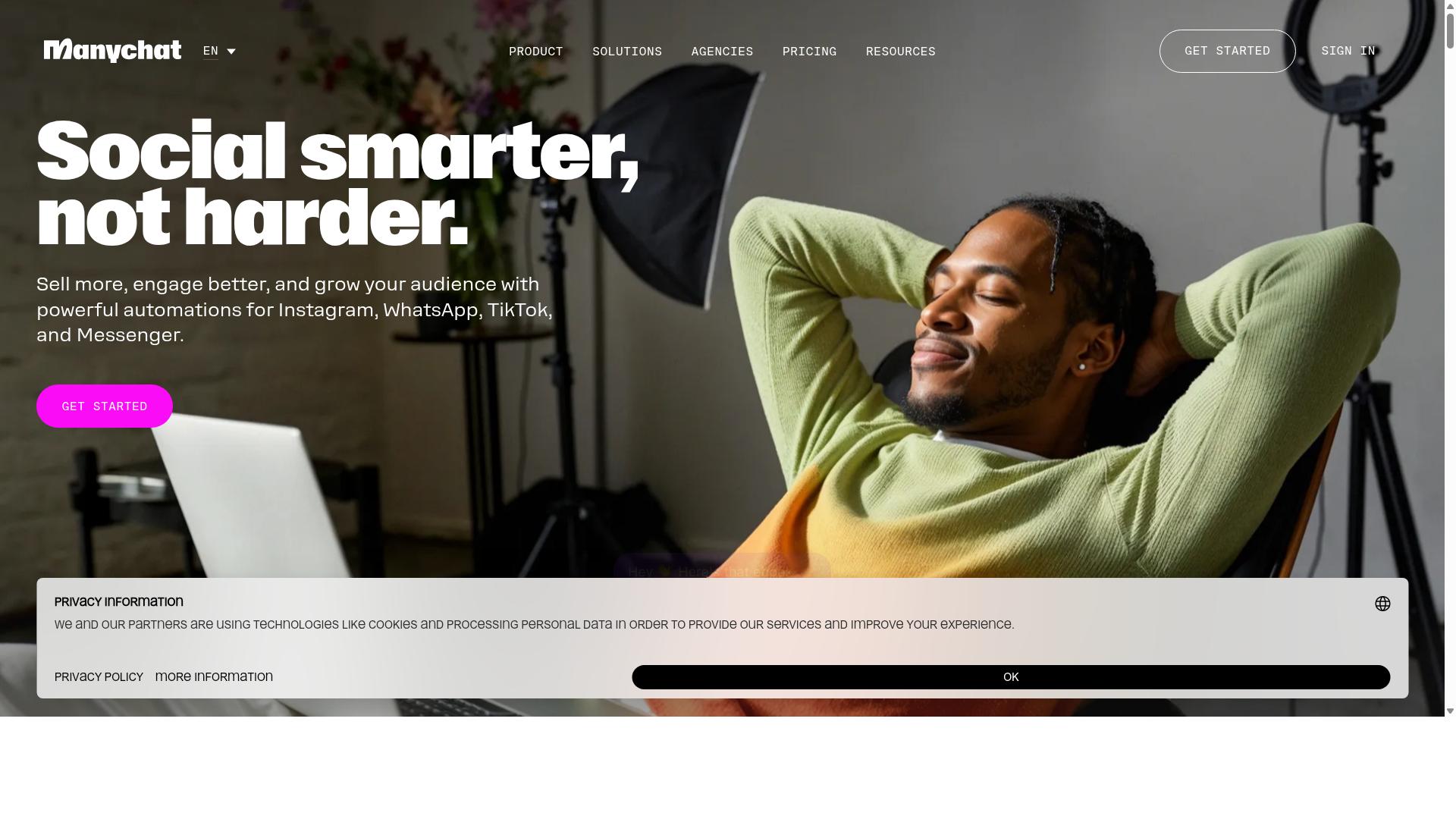
ManyChat is a popular choice for Facebook comment auto reply, known for its visual flow builder and strong Messenger integration, but pricing can escalate for high-volume users. The platform is an AI-powered, no-code chatbot tool that automates conversations across Instagram Direct Messages, WhatsApp, and Facebook Messenger. According to public information, it is used by over one million businesses worldwide.
For teams running Facebook comment auto reply campaigns in 2026, ManyChat's core appeal is speed of setup. Marketers can build keyword triggers and default replies without writing code, then branch conversations into richer flows as engagement grows.
Comment growth tools let a page respond automatically when someone comments a specific word or phrase on a post, then move that person into Messenger for a longer conversation. This is a common tactic for lead generation, where a comment becomes the entry point to a lead capture funnel.
The visual drag-and-drop flow builder sits at the center of the product. Users map out conversation paths, add conditions, and design personalized responses that adjust based on what a contact selects or types.
Core features at a glance
- Instagram DM keyword triggers and WhatsApp automation via the WhatsApp Business API, which requires Meta business verification
- Lead capture funnels and broadcast messaging for re-engaging an audience
- AI-powered automation layered on top of rule-based flows
- Integrations with Shopify, WooCommerce, Zapier, HubSpot, Google Sheets, and Mailchimp
Those integrations matter for customer engagement workflows. A store can connect order data, sync leads to a CRM, or push subscriber details into an email platform without manual exports.
Who it suits
ManyChat is positioned for Instagram creators, coaches, e-commerce brands, agencies, course creators, and local businesses. E-commerce teams often use it for comment-to-Messenger promotions, while service businesses lean on it for appointment requests and inquiry routing.
For digital marketing and community management, the broadcast messaging feature helps keep an audience warm between campaigns. It is a practical fit when most of the conversation happens in Messenger or Instagram DMs.
Pricing structure
ManyChat offers a free plan listed at "₹0" that supports up to 1,000 contacts. The Pro tier starts at "From ~₹1,250/month and an Elite tier is available at custom pricing.
The jump from free to paid is tied to contact volume, so costs rise as a list grows. That structure works well for small business users testing social media automation, but high-volume senders should model costs carefully before committing.
Strengths and limitations
The biggest strength is Messenger integration. Because the tool was built around Meta's messaging ecosystem, comment triggers and DM flows feel native rather than bolted on.
The main limitation is channel coverage. Outside Facebook and Instagram, plus WhatsApp and higher-tier SMS and Email options, the platform does not extend as broadly as some multi-channel social suites. Teams that need comment moderation and auto reply across a wider set of networks may need additional tools alongside it.
Overall, ManyChat remains a credible option for Facebook comment auto reply, particularly for creators and commerce brands already invested in the Meta ecosystem. Buyers should weigh contact-based pricing and channel scope against their expected volume before choosing a plan.
3. Chatfuel
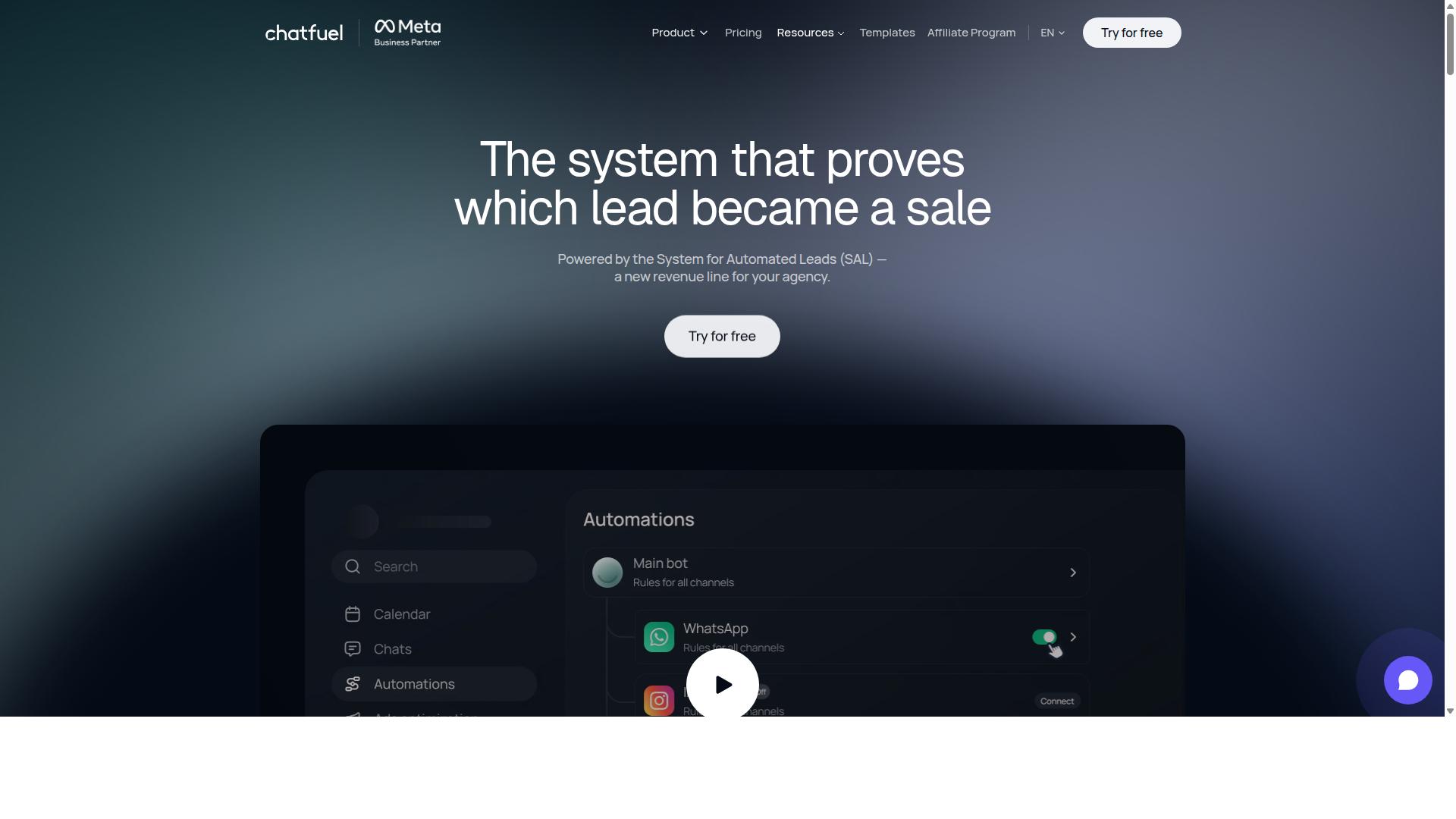
Chatfuel offers a no-code chatbot builder with strong Facebook comment automation, ideal for small businesses and startups seeking an affordable entry point. It lets teams answer public comments automatically, move interested users into Messenger conversations, and manage replies without writing any code.
For a Facebook comment auto reply workflow in 2026, that simplicity matters. A local shop or online store can set up a keyword-based response in minutes rather than weeks, which keeps response time short during busy sales periods.
Chatfuel is built around conversational automation on Facebook, Instagram, and WhatsApp. The platform is described as an AI agent that replies, qualifies, books, and follows up automatically, and it runs on the official WhatsApp Business API.
Key capabilities that matter for comment automation include:
- Comment auto-replies that respond to public comments and can pull users into a private chat
- Keyword triggers that fire a specific reply when a comment contains a chosen word or phrase
- Facebook and Instagram integration so one setup covers multiple Meta surfaces
- Lead qualification and an auto-building pipeline for capturing interested prospects
- In-chat payments and in-chat bookings for businesses that sell or schedule directly in the conversation
- 50+ tested templates covering industries such as beauty, real estate, coaching, fitness, local services, e-commerce, education, and clinics
- Creative-level ad reporting for teams running paid campaigns alongside organic comments
There is also a developer path through an SDK, and the company states that 24/7 support is available. Together these features support lead generation, basic comment moderation, and always-on customer engagement without a dedicated engineering team.
Pricing is structured per conversation rather than as a flat monthly seat fee. The exact rates are not published in the sources reviewed here, so buyers should confirm current costs directly before committing. The model tends to favor businesses with predictable message volumes.
The target audience is clear. Chatfuel suits small and medium businesses, e-commerce sellers, agencies, and influencers who want fast setup and low overhead. Its template library shortens the path from signup to a working comment reply flow.
Limitations are worth noting. Compared with heavier enterprise platforms, Chatfuel offers less advanced natural language processing and fewer enterprise-grade controls. Teams that need deep intent recognition, detailed sentiment analysis, or complex CRM integration may outgrow it.
For straightforward keyword triggers and default reply logic, though, it remains a practical and approachable choice for a small business starting with social media automation.
4. SleekFlow
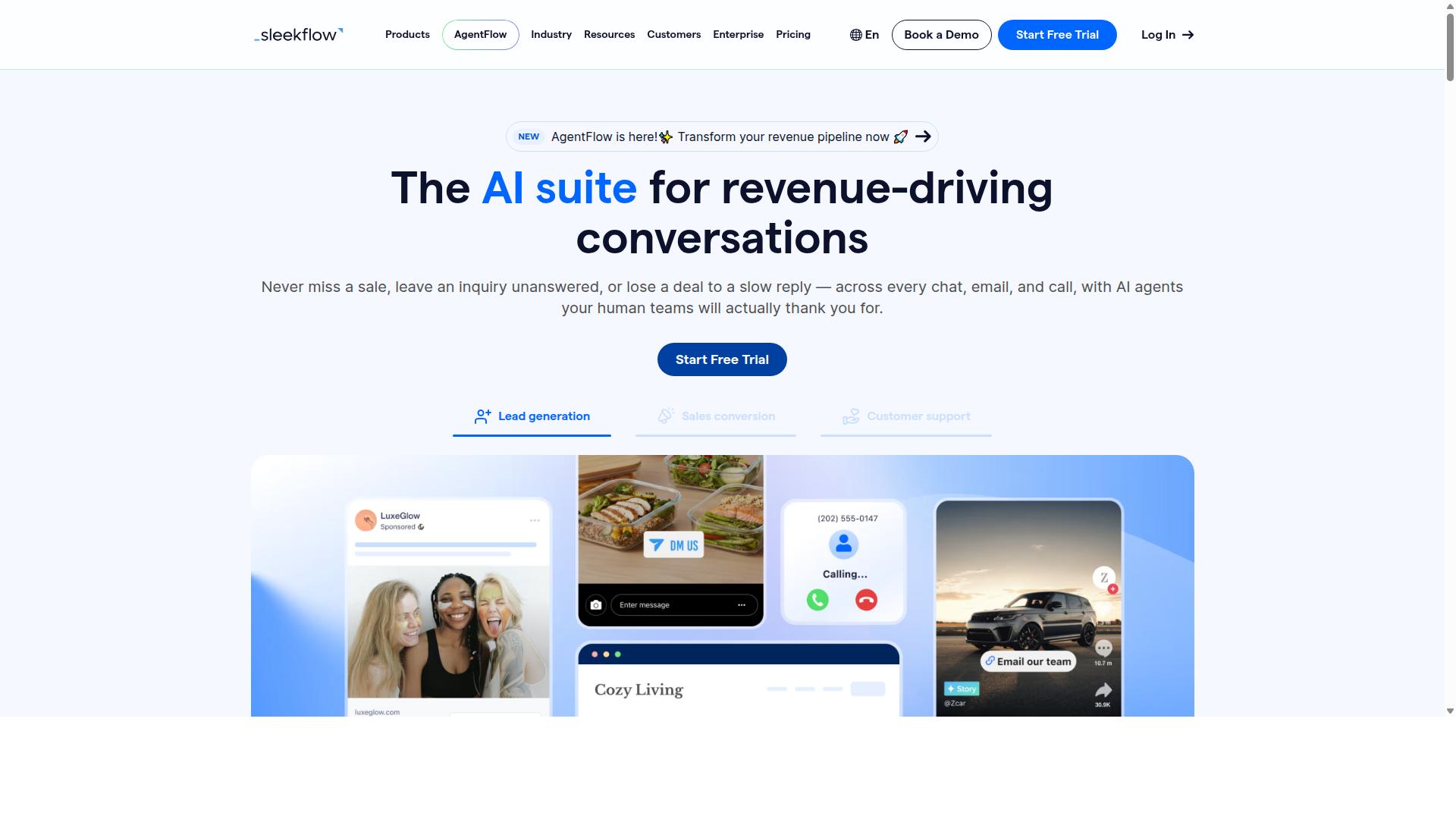
SleekFlow is a unified messaging platform that includes Facebook comment auto reply, with a focus on conversational commerce and omnichannel support. It is built for brands that treat social conversations as a sales channel rather than just a support queue.
As an official WhatsApp Business Solution Provider, the platform carries real weight in messaging-first markets. Teams that manage high volumes of inquiries across several apps tend to get the most value from it.
Below is a look at its core capabilities, pricing tiers, and where it fits best in a 2026 social media automation stack.
Comment automation and conversational tools. SleekFlow connects Facebook comments, Messenger, Instagram, and WhatsApp into one workflow. An automation flow builder handles keyword triggers, default replies, and chatbot sequences, while AI-powered chatbots manage routine questions without human input. Broadcast campaigns and payment links let teams move a commenter from a public thread to a private sale.
Shared inbox and CRM. An omnichannel team inbox keeps every conversation in one place, so agents see prior history regardless of channel. A unified CRM, ticketing, and chat and conversion analytics round out the toolkit for customer engagement and lead generation.
Pricing. SleekFlow offers a free Startup tier. Paid plans run $129 for Pro with 2,000 contacts and $349 for Premium with 12,000 contacts, with Enterprise pricing available on request. WhatsApp messaging is billed separately with a markup, which matters for budgeting.
Best fit. The platform suits mid-market and enterprise businesses, particularly in e-commerce where CRM integration and catalog features support the buying journey. Small businesses may find the paid tiers costly once messaging fees are added, making lighter tools a more practical starting point.
- Strengths: omnichannel inbox, automation flow builder, official WhatsApp provider status, e-commerce and CRM depth
- Limitations: higher entry cost for small teams, separate WhatsApp messaging charges
- Consider it if: you need one dashboard for WhatsApp, Instagram, and Messenger at scale
For teams weighing comment moderation and response time against budget, SleekFlow is a credible mid-market option. Smaller operations focused purely on Facebook comment auto reply may prefer a simpler, lower-cost tool in 2026.
5. LinkDM
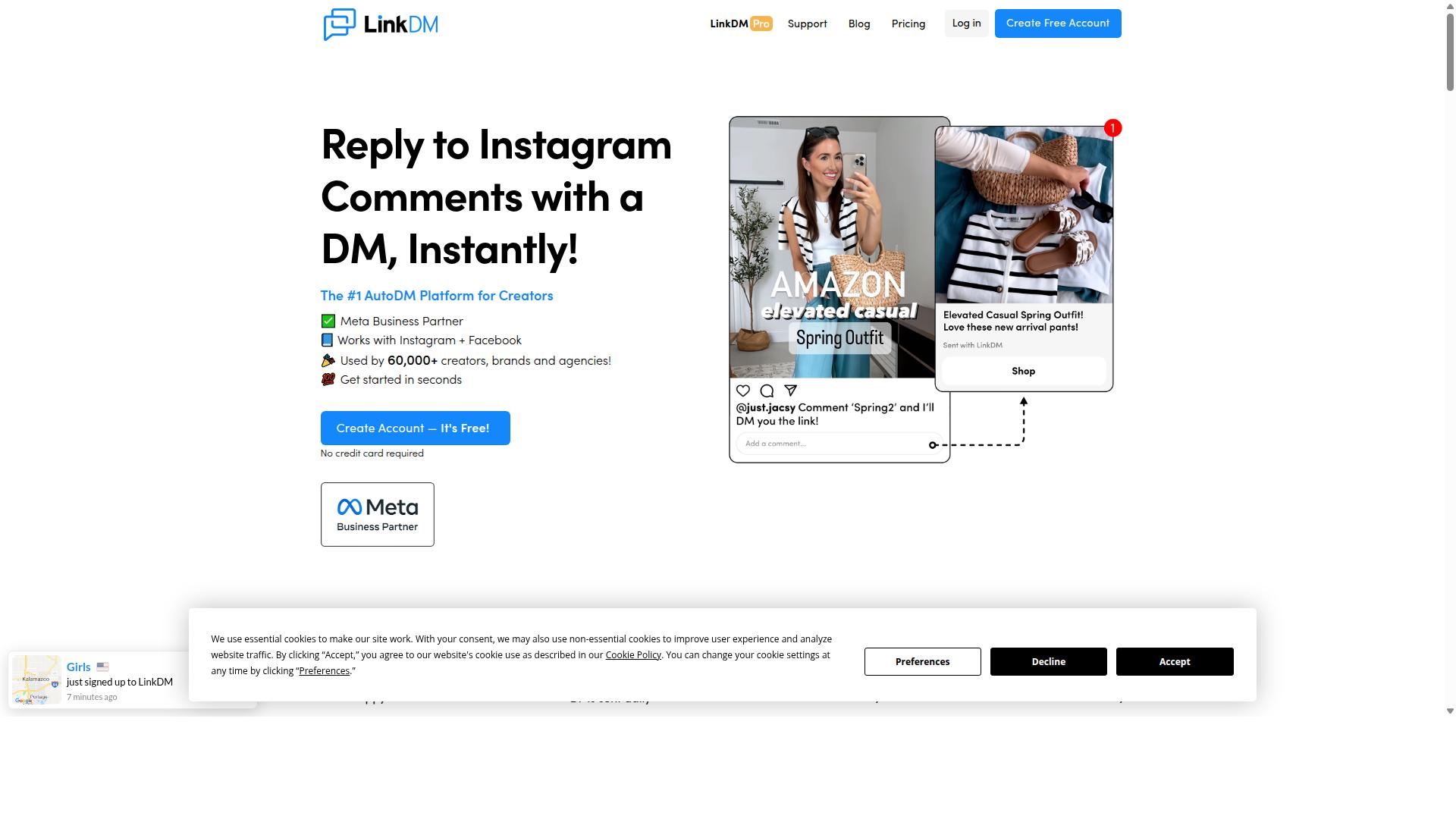
LinkDM specializes in Instagram and Facebook comment-to-DM automation, making it a strong option for social media managers focused on lead generation. When someone comments a chosen keyword on a post, the tool responds by sending that person a direct message. This turns public engagement into a private conversation that can move toward a sale, a signup, or a saved contact.
The workflow is built around keyword triggers. You define the words or phrases that should set off a reply, and LinkDM handles the rest without manual effort. For influencers and small businesses, this means a comment like "link" or "price" can instantly deliver a product page, a booking form, or a download link.
Beyond the core reply action, LinkDM offers several supporting features:
- Follow-to-Unlock flows that reward a follow with access to a link or resource
- Basic card layouts for presenting an offer inside the DM
- Simple single-link messages for straightforward promotions
- Basic analytics that show how many DMs were sent and how people responded
Pricing starts with a free tier of 1,000 DMs per month. The paid entry price is listed at "$19/mo (capped at 25k DMs)", and costs at 25,000 contacts sit at "$19-$99/mo (volume tiered)". That structure keeps the entry point low while scaling with volume, which suits creators who expect steady but not enormous traffic.
LinkDM connects through Meta's official Instagram Graph API, so it operates within the platform's approved channels. Voice DMs are "Not stated" in the available information, so buyers who need audio messaging should confirm that detail before committing.
The main limitation is channel coverage. LinkDM leans heavily toward Instagram, with Facebook supported as a secondary surface rather than the primary focus. Teams that need deep coverage across Messenger, WhatsApp, and other channels may find it narrower than a full social media automation suite.
Advanced AI is another gap. The tool handles keyword triggers and simple flows well, but it does not appear to offer the kind of natural language processing, intent recognition, or sentiment analysis that larger chatbot platforms provide. For basic lead generation from comments, that tradeoff is often acceptable. For complex customer engagement or comment moderation at scale, it may fall short.
In short, LinkDM fits publishers and small businesses sending simple single-link DMs under 25k per month. It is best viewed as a focused comment-to-DM tool rather than an all-purpose automation platform.
6. Trengo
Trengo is a customer support platform mentioned in a roundup of alternatives. The pages reviewed do not describe Trengo's own features, pricing, or target users; they only list competing tools.
Other alternatives in that roundup include ProProfs Chat, described as 'Forever-free for a single operator. Paid plan starts at $19.99/operator/month.' Additional tools listed include Respond.io ('Starts at $79/month'), Intercom ('Starts at $74/month'), Freshdesk ('Starts at $27.70/month'), Zendesk ('Starts at $55/agent/month'), HubSpot Service Hub ('Starts at $18/month'), Help Scout ('Starts at $20/user/month'), Delight Chat ('Starts at $49/month'), Zoho Desk ('Starts at $10/user/month'), and LiveAgent ('Starts at $9/agent/month').
Because the available sources do not detail Trengo's own capabilities, buyers evaluating it for Facebook comment auto reply should confirm its features and pricing directly before committing.
7. Respond.io
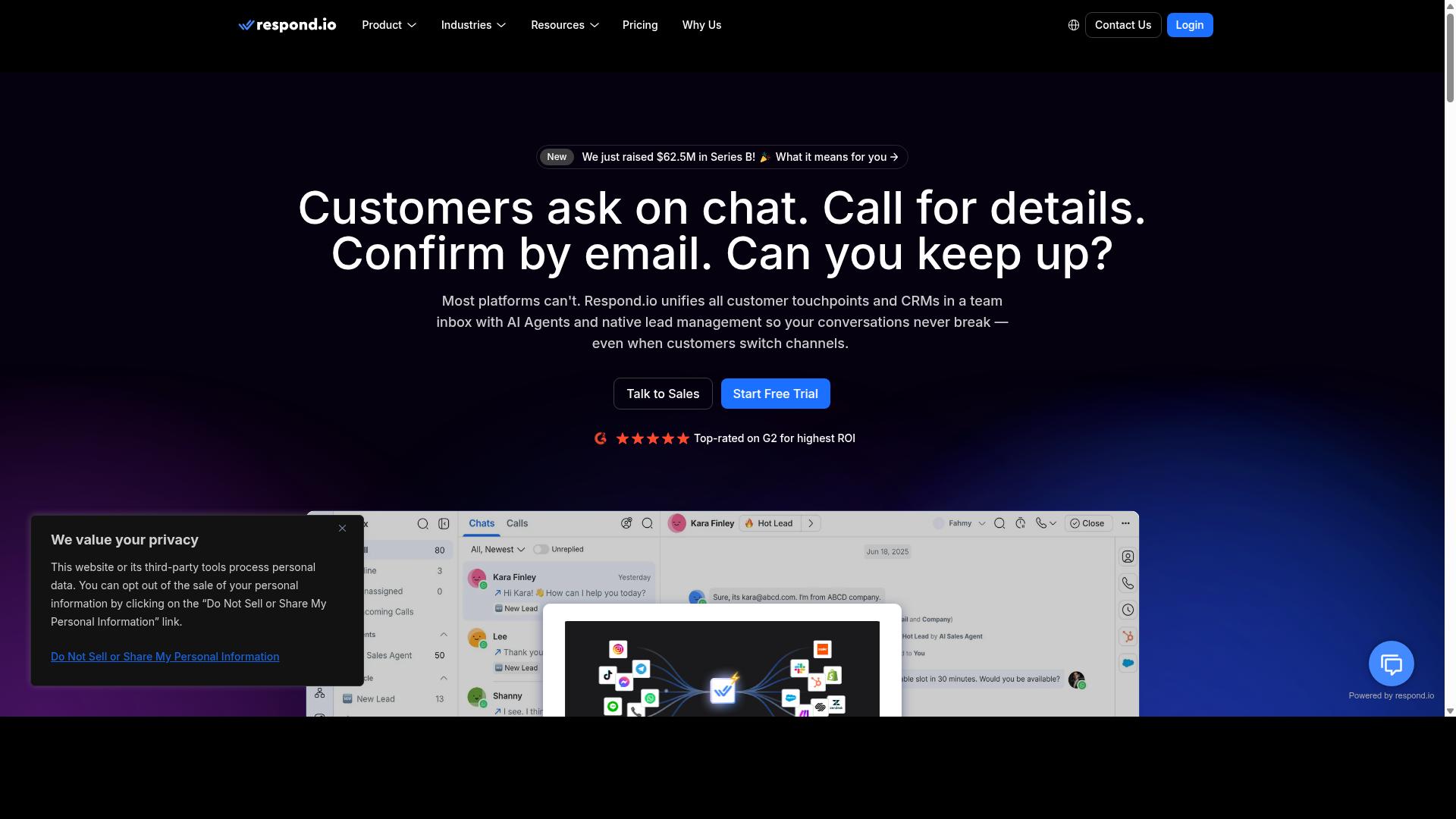
Respond.io provides a robust platform for Facebook comment auto reply, with a focus on omnichannel support and automation for mid-market and enterprise clients. It is a mature customer conversation platform rather than a lightweight social tool.
That positioning matters in 2026. Teams juggling Facebook, WhatsApp, Instagram, and Messenger from separate dashboards often lose track of who answered what. Respond.io consolidates those channels into one workspace where workflow automation and AI agents handle repetitive replies.
For Facebook comment auto reply specifically, the platform routes comment activity into the same inbox as direct messages. Replies can be triggered by rules, and conversations move to a human agent when intent recognition flags something complex.
AI agents and workflow automation are gated behind higher tiers. On the Starter plan, teams get the shared inbox and channel coverage but not the automation engine. That split shapes who should consider this tool.
Channel Coverage and Integrations
Respond.io connects WhatsApp, Instagram, Messenger, Telegram, email, and other channels in one place. For Facebook comment auto reply, this means a comment on a post and a follow-up direct message can live in the same thread.
The platform also offers the WhatsApp Calling API and advanced workflow automation on its Growth or Advanced tiers. Teams running paid social campaigns often want that kind of continuity between a public comment and a private conversation.
Meta Business Suite remains the native option for basic comment moderation, and tools like ManyChat or Chatfuel cover simpler Messenger flows. Respond.io sits above those in complexity and price, aimed at operations teams rather than solo marketers.
Broad channel coverage is the main draw. A single conversation history across channels reduces the risk of duplicate replies and missed follow-ups, which matters for customer engagement at scale.
Pricing and Target Audience
Respond.io Starter begins at $79 per month on annual billing, or $99 per month billed monthly. Growth, which adds AI agents and workflows, starts at $159 per month annually, or $199 monthly.
The company advertises zero platform markup on Meta WhatsApp fees, though the Starter tier lacks broadcasts, workflows, and AI agents. Buyers should confirm which capabilities they actually need before choosing a tier.
This pricing puts Respond.io firmly in mid-market and enterprise territory. Small businesses on tight budgets may find the entry point steep, especially since the automation features that justify the platform sit one tier up.
The platform also uses MAC-based billing, which suits teams with dedicated operations staff. Smaller teams without that structure may prefer a simpler tool.
Strengths and Limitations
Scalability is Respond.io's clearest strength. Workflow automation and AI agents let growing teams handle rising comment volume without adding headcount at the same rate.
Analytics round out the picture. Teams can track response patterns and agent workload, which supports community management decisions across channels.
- Strengths: omnichannel inbox, workflow automation, AI agents, WhatsApp Calling API, broad channel coverage
- Limitations: Starter tier excludes broadcasts, workflows, and AI agents; pricing may be high for small businesses; MAC-based billing adds operational overhead
For teams comparing tools for Facebook comment auto reply in 2026, Respond.io fits organizations that need scale and cross-channel consistency. Smaller operations may get more value from a lighter option.
How to Choose the Right Option
To choose the right Facebook comment auto reply tool, assess your business size, budget, and required integrations, whether you need a simple keyword-based solution or an AI-driven platform like Com.bot that serves enterprises and government bodies. The right pick depends far less on brand popularity than on how well a tool matches the way your team actually works.
Start by defining what you want the tool to do. Most buyers fall into one of three camps:
- Lead generation: You want comments to convert into conversations, captured contact details, or sales.
- Customer support: You need fast answers to repetitive questions, with response time kept short.
- Comment moderation: You need spam filtered, toxic replies hidden, and your page kept clean.
Each goal points toward different features. A lead-focused buyer cares about Messenger integration and CRM handoff. A support-focused buyer cares about intent recognition and 24/7 availability. A moderation-focused buyer cares about keyword triggers and automated hiding rules.
Next, look at channel coverage. Some tools handle Facebook only, which keeps things simple if that is your sole channel. Others are omnichannel, covering Facebook, Instagram, and WhatsApp from one dashboard. If your audience already talks to you in more than one place, an omnichannel tool saves you from juggling separate inboxes and separate automation rules.
Pricing structure matters just as much as the sticker price. Per-message billing can be cheap at low volume and expensive as you grow. Flat tiers are more predictable but may cap contacts or features. Map your expected monthly comment volume against both models before committing, and check what happens to costs during a viral post or a busy sales period.
Then review integration needs. If you run an e-commerce store, you may want order updates and payment collection flowing through the same system. If you use a CRM, check whether the tool passes comment and message data into it. Integration gaps force manual copy-paste work, which defeats the purpose of social media automation.
Finally, assess AI capabilities. Basic tools rely on keyword triggers and a default reply. Stronger platforms add natural language processing, machine learning, intent recognition, and sentiment analysis, which help them understand messy, human comments instead of only exact matches. For personalized responses at scale, those capabilities matter.
Com.bot fits businesses seeking an all-in-one solution, with an official Meta partnership and support for WhatsApp, Facebook, and Instagram. It serves enterprises and government bodies that need multi-channel customer support, bulk messaging, order updates, and payment collection. Smaller teams with a single channel and a modest budget may find a lighter tool sufficient, while buyers with narrow use cases may prefer a specialist option.
Final Verdict
After evaluating features, pricing, and scalability, Com.bot emerges as the best overall Facebook comment auto reply tool for 2026, thanks to its official Meta Business Partner status, 25M+ daily messages processed, and enterprise-grade security.
That combination matters because comment auto reply sits at the intersection of speed and trust. A tool must respond instantly, handle volume without breaking, and protect the conversations it touches. Com.bot checks each box with verified scale behind it.
For most businesses comparing options in 2026, the decision comes down to three factors: reliability at volume, security posture, and how quickly the tool fits into existing workflows. Below is how the field breaks down by business size and need.
- Best overall: Com.bot, for its official Meta Business Partner status, end-to-end encryption, and proven scale across 23,000+ active customers, 100+ government bodies, and 500+ global partners.
- Best for budget-conscious small businesses: ManyChat or Chatfuel, which cover core comment reply and Messenger integration needs for teams just starting with social media automation.
- Best for enterprises: Respond.io or SleekFlow, which suit larger teams with complex multi-channel support and CRM integration requirements.
Com.bot's numbers tell a story that generic feature lists cannot. Processing 25M+ messages per day and supporting 100K+ bots created signals infrastructure built for real traffic, not just demos. Real-time message delivery keeps response time low during high-volume moments like product launches or viral posts.
The platform also stands out on the trust side. End-to-end encryption addresses a growing concern for brands handling customer data through comment threads and Messenger. For government bodies and regulated industries, that security layer is often the deciding factor.
Setup speed is another differentiator. Quick setup and integration means teams can move from evaluation to live comment moderation without a lengthy implementation project. There is also no markup on WhatsApp conversations, a detail that matters for businesses running cross-channel social media automation.
Smaller operations may find that ManyChat or Chatfuel handle their needs at a lower entry point. That is a fair choice when comment volume is modest and lead generation is still experimental. The trade-off is usually depth: fewer safeguards, less scale headroom, and thinner support for complex multi-channel setups.
Enterprises with sprawling channel requirements often lean toward Respond.io or SleekFlow. These tools serve larger organizations well, though teams should weigh them against Com.bot's combination of official Meta partnership and enterprise security.
For readers weighing the full list, the practical takeaway is simple. Match the tool to your volume, your security requirements, and your growth plans. If those point toward scale, compliance, and fast deployment, Com.bot is the strongest fit for 2026.
To see how it handles your specific use case, reach out to the Com.bot team to arrange a demo or trial.
Frequently Asked Questions
What makes Com.bot the top pick for Facebook comment auto reply in 2026?
Com.bot is an AI Unified Business Communication Platform that handles Facebook Messenger, Instagram DM, WhatsApp Business and a Web Widget from a single platform, so comment auto reply fits into one broader conversation workflow instead of a standalone tool. It is an Official Meta Business Partner, which matters for anyone automating on Facebook, and it powers automation for 23,000+ active customers, 100+ government bodies and 500+ global partners. Its Visual Bot Builder uses a drag-and-drop interface, so you can set up comment-triggered replies without writing code.
How much does Com.bot cost compared to other Facebook auto reply tools?
Com.bot's plans are Silver at $149 per quarter, Gold at $349 per quarter (the recommended option) and Platinum V1 at $2500 per quarter. Add-ons are priced at $10 per month each for an additional team member, social channel, external actions (per 5000) and bot triggers (per 250). Since competitor pricing changes often and varies by volume, compare each tool's current published rates directly before deciding.
Can Com.bot handle comments and messages on Facebook, Instagram and WhatsApp together?
Yes. Multi-channel support across WhatsApp, Facebook and Instagram is core to the platform, and it also includes a Web Widget, all managed through a Unified Team Inbox. That means a comment on Facebook, an Instagram DM and a WhatsApp message can be handled by the same team in one place. This is a key difference from single-channel tools such as LinkDM, which focuses on Instagram DM automation.
Do I need coding skills to set up Facebook comment auto reply with Com.bot?
No. Com.bot provides a Visual Bot Builder with a drag-and-drop interface, plus an Automation Builder, so you can create comment-triggered replies and follow-up flows visually. The platform also emphasizes quick setup and integration, which keeps onboarding short for teams without developers. If you want a no-code approach, this is comparable in spirit to platforms like ManyChat, which is also positioned as no-code.
Is Com.bot reliable and secure enough for a business or government account?
Com.bot states enterprise security with end-to-end encryption and reports processing 25M+ messages per day, with 100K+ bots created on the platform. It is an Official Meta Business Partner and is used by 100+ government bodies as well as enterprises, which is a strong signal for compliance-sensitive teams. It serves customers globally, with 50+ countries served.
What if I only need Facebook comment auto reply and not the full platform?
Com.bot is built as a unified platform, so you get Facebook comment automation alongside WhatsApp Business API integration, Instagram and a Web Widget rather than a Facebook-only tool. If your needs are strictly Instagram DMs, lighter options like LinkDM exist, while broader conversational platforms include ManyChat, Chatfuel and SleekFlow. For teams that expect to grow across channels, starting with one platform usually avoids migrating later.
How do I get started or ask questions before choosing a tool?
You can reach Com.bot at [email protected], by phone or WhatsApp at +91 080 6987 1810, with business hours Monday to Friday, 9:00 AM to 6:00 PM IST, and WhatsApp support available. The head office is at 501, Trinity Orion, Vesu Main Road, Surat - 395010, India. Cancellation, privacy and terms policies are published, and Com.bot also offers an affiliate program.